
AI can produce the submission. The harder question is whether the submission still proves that a student learned anything.
That is the useful way to read a viral headline saying artificial intelligence can now complete most undergraduate assignments. The headline came from coverage of a new MIT report, but MIT did not feed every college assignment into one giant test and announce a universal pass rate. Its warning is broader—and more interesting.
Generative AI has become good enough at producing plausible answers that the old relationship between homework and learning is breaking down. A polished answer may show what a chatbot can generate. It may no longer show what the student understands.
🧭 Quick glossary
The short answer
MIT’s report says AI is forcing colleges to rethink problem sets, take-home exams, office hours, study groups, research projects, and even what it means to master a subject. It does not say every student can press one button and earn a degree.
The report’s guiding principle is simple: augmentation, not automation. Use AI to extend human thinking, not to replace the thinking a course is supposed to teach.
That distinction matters. A calculator is helpful after a student understands what calculation to perform. It is less helpful if the entire lesson is learning how the calculation works. AI creates this same problem across writing, coding, mathematics, research, and design—only at a much larger scale.
Why the headline feels believable
Students are not imagining the change. A chatbot can outline an essay, explain a proof, debug code, summarize readings, and rewrite a paragraph in seconds. Online conversations use blunt phrases such as “AI homework,” “AI cheating,” and “ChatGPT assignments” because those are the situations people actually face.
The temptation is obvious. A difficult assignment arrives at 9 p.m. The student is tired. The prompt box is open. A clean answer appears before the student has decided what the question is really asking.
This is what MIT’s committee calls the risk of an “illusion of learning.” The student receives the right-looking answer and mistakes access to that answer for understanding. The report also warns about “cognitive surrender”: quietly handing over the part of the task that was meant to exercise judgment.
The problem is not merely dishonesty. A student can follow the course rules and still use AI so passively that very little learning happens.

Homework used to carry two jobs
Most assignments do two things at once:
- They help a student practice.
- They give an instructor evidence of learning.
Generative AI can weaken both jobs. If it performs the difficult steps, the student loses the practice. If the final answer looks excellent, the instructor may not know whether the student can explain or repeat the work.
That is why banning AI is not a complete solution. It is also why adding a sentence that says “AI allowed” does not solve the design problem. The important question is: What human ability is this assignment meant to reveal?
The headline versus the report
The committee says every subject should become “AI-aware.” That does not mean every class should use AI in the same way. A poetry seminar, a proof-based mathematics course, and a design lab are teaching different kinds of judgment. Their assignments should react differently.
MIT suggests oral exams, semester portfolios, and take-home work paired with an in-class conversation. These are ways to make the student’s process visible again.
The goal is not to make every assignment AI-proof. The goal is to make learning observable.
Why AI detectors are not the answer
The report advises against relying on AI detectors. These tools produce probabilities, not proof. They can flag human writing, miss edited AI text, and create an arms race in which students run text through “humanizer” tools.
False accusations also do not fall evenly. MIT specifically notes potential harm to non-native English speakers and neurodivergent students. A system designed to protect trust can damage it if an instructor treats an uncertain score as a verdict.
A better question is not “Can software catch the student?” It is “Does the assignment make understanding visible?”
Try the assignment stress-test
Open each question the assignment can answer “yes” to. This is a design aid—not an AI detector, cheating score, or grade.
1. Must the student show a process?
Useful evidence might be an annotated draft, calculation trail, debugging log, or rejected option—not a record of every click.
2. Must the student explain or defend a choice?
A short conversation or audio explanation can reveal whether the student understands the reasoning behind the final answer.
3. Must the student revise after feedback?
A focused revision memo can show what changed and why, without turning the assignment into paperwork.
4. Must the student use local evidence?
A class discussion, lab observation, course dataset, or project decision makes a generic generated answer less useful.
0: add one visible learning signal. 1–2: some learning is visible; consider one more checkpoint. 3–4: several forms of learning are already visible.
How it works: the expandable prompts help you inspect assignment design. Nothing is uploaded or stored. Treat the count as a conversation starter, not a judgment about a student.
What changes for students
Students now need a skill that was rarely named before: knowing which part of a task should remain difficult.
Using AI to generate practice questions may strengthen learning. Asking it to challenge an argument can expose weak reasoning. Using it to replace the first attempt, the confusion, and the revision may remove the very experience the assignment was designed to create.
A simple personal rule is to preserve one “thinking checkpoint.” Before asking AI for an answer, write what you think the problem is, what you already know, and where you are stuck. After using AI, close it and explain the result in your own words. If you cannot, the answer has arrived before the learning.
What changes for instructors
Instructors do not need to rebuild an entire course overnight. Start with the assignments that count most and ask what evidence of learning each one provides.
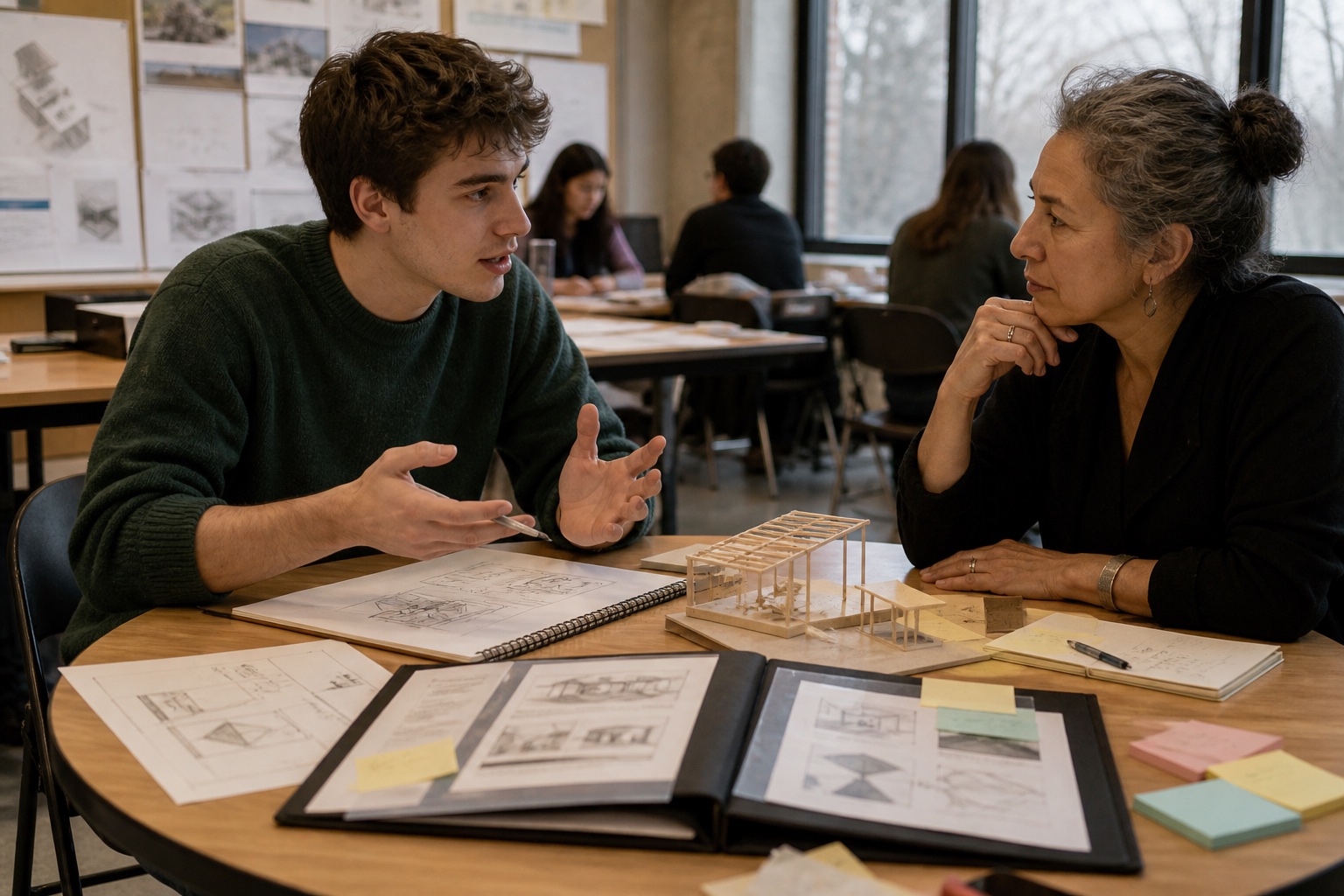
A final essay could include a proposal, one source decision, a revision memo, and a brief conversation. A coding task could include a debugging log and a live explanation of one function. A design project could preserve discarded options and the reasoning behind the final choice.
These additions are not busywork when they reveal judgment. They become busywork when students are asked to document every click merely to prove innocence.
There is no universal balance. That is one of the report’s strongest points.
The real warning
AI does not make college learning pointless. It makes weak evidence of learning easier to manufacture.
That is uncomfortable because the old system often rewarded the visible product: the correct answer, the smooth essay, the functioning code. AI forces schools to pay more attention to the invisible parts—how a student chose, tested, explained, and changed an idea.
The viral question is whether AI can do the homework. The better question is whether the homework can still show who did the learning.
Sources
- MIT, AI and Education: A Watershed Moment, August 25, 2026.
- MIT Committee on Generative AI and Education, Final Report, August 13, 2026.
- MIT, AI and Education initiative.
Leave a Reply