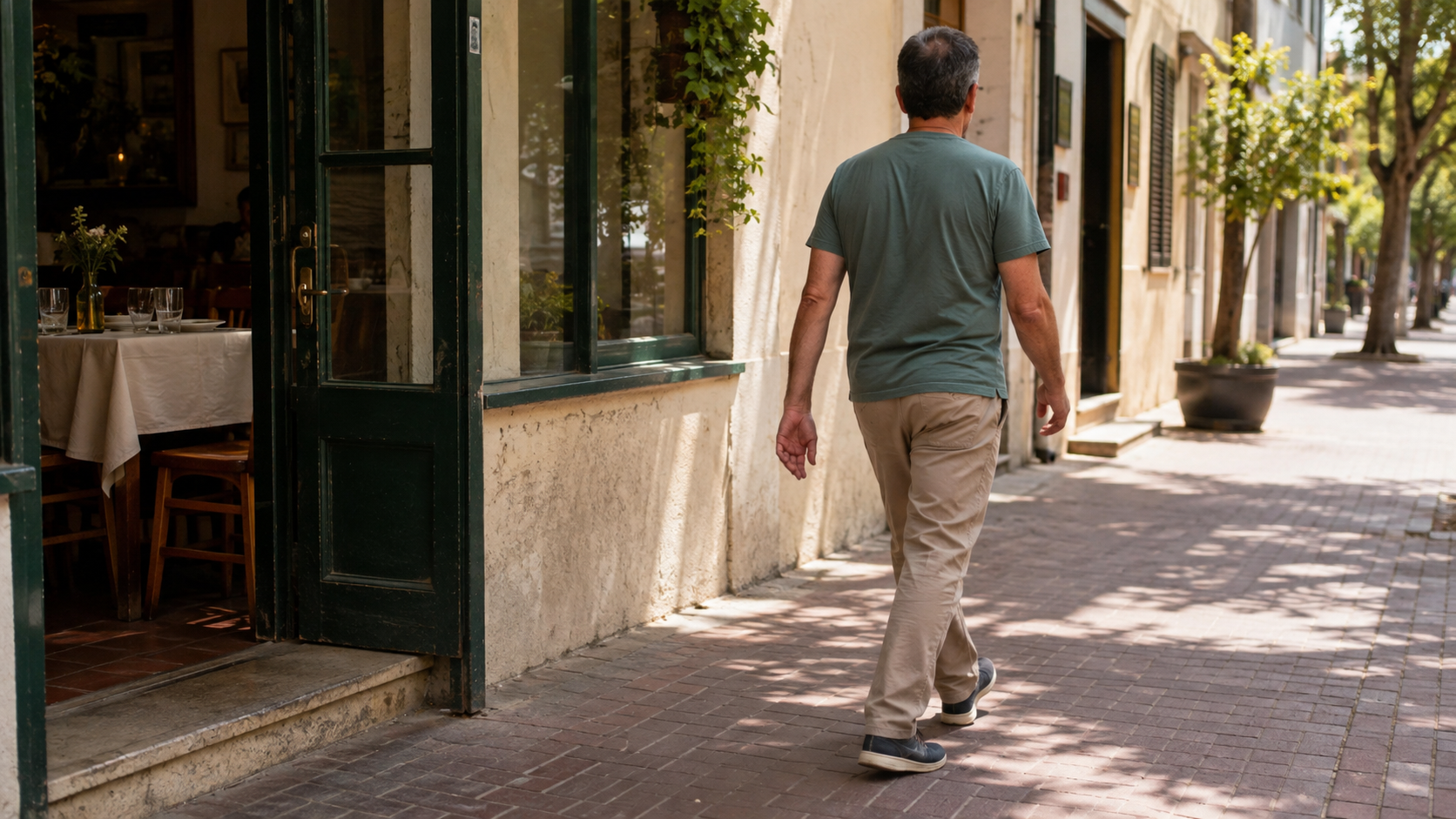
I usually wait about half an hour after eating before I go for a walk. But do I actually need to wait that long?
I’m talking about an ordinary walk after a meal—not a run or a hard workout. That distinction turns out to matter more than a fixed 30-minute rule.
The meal and the pace still matter
“Walking after eating” can mean an easy stroll or a fast uphill workout. Those aren’t the same demand on your body. A full stomach is also different from a small snack.
Cleveland Clinic’s clinical guidance says there is no one-size-fits-all recommendation and discusses walking within 15 to 30 minutes of eating. That is a suggested window, not a requirement to remain seated until minute 30. If walking brings on discomfort, ease off or stop rather than pushing through to finish a target.
- Postprandial
- After a meal. Here, it describes the glucose response following food.
- Blood glucose
- Sugar circulating in the blood. Its rise after food is a normal process; the size and duration can matter clinically.
- Crossover study
- Participants try more than one study condition at different times, allowing comparison within the same people.
Walking immediately after eating: what has actually been tested?
A small 2025 randomized crossover trial compared three conditions in 12 healthy young adults: resting, walking for 10 minutes immediately after a glucose drink, and walking for 30 minutes starting half an hour later.
Both walking conditions produced a lower overall glucose response over the next two hours than resting. The shorter, earlier walk also lowered the peak compared with rest.
That is interesting evidence against assuming a half-hour pause is always necessary. It is not proof that 10 minutes is universally as good as 30. The researchers changed both the starting time and the duration, so those effects cannot be cleanly separated. And a glucose drink in a small group of young adults isn’t the same thing as your usual dinner.
How long should you walk after eating?
Ten minutes is a studied option, not a magic minimum. The more useful question is whether a manageable walk fits after a meal—not whether you can turn every meal into a mileage target.
In a 2016 crossover study, 41 adults with type 2 diabetes, averaging about 60 years old, followed two different walking instructions for two weeks each. One was to walk 30 minutes a day without specifying meal timing. The other was to walk 10 minutes after each main meal.
The post-meal schedule led to a lower measured glucose response after meals. These were short study periods in people with diabetes; the result doesn’t establish a precise prescription for everyone. It does show why three shorter walks and one longer walk are not necessarily interchangeable when the question is the glucose rise after food.
Walking before or after eating—does it matter?
A walk before a meal still counts as physical activity. But these studies asked a more specific question: what happens to glucose after eating when walking is placed around that period?
They don’t show that walking before food is useless. Nor does a normal rise in blood sugar after eating mean something has gone wrong. Cleveland Clinic’s explanation makes that distinction: glucose rises after food, and activity can help working muscles use it.
So a walk before lunch is not wasted. Walking after lunch simply places some activity in the period these studies were interested in. The evidence is about that specific benefit, not a contest over which walk counts.
What if walking after a meal feels uncomfortable?
A walk is not a countdown
- Feeling comfortable?
- An easy, short walk can be an option without a mandatory 30-minute pause.
- Very full or uncomfortable?
- Give yourself more time. The study schedule is not an instruction to override symptoms.
- Planning a strenuous workout?
- Do not use these short-walk studies to decide when to run hard or train intensely after a meal.
People who use insulin or other medicines that can cause low blood sugar need an individualized activity plan. A walk can affect glucose; that matters for safety as well as for possible benefit. Ask your diabetes care team how meal-time activity fits your medication and monitoring plan.
Do I need to watch the clock?
The research gives me a reason to question my usual wait, not another exact schedule to follow. A short, comfortable walk after a meal is different from setting out for a demanding workout on a full stomach.
If I choose to rest for half an hour, that can still be a matter of comfort. I just don’t need to mistake that preference for a rule.
Leave a Reply