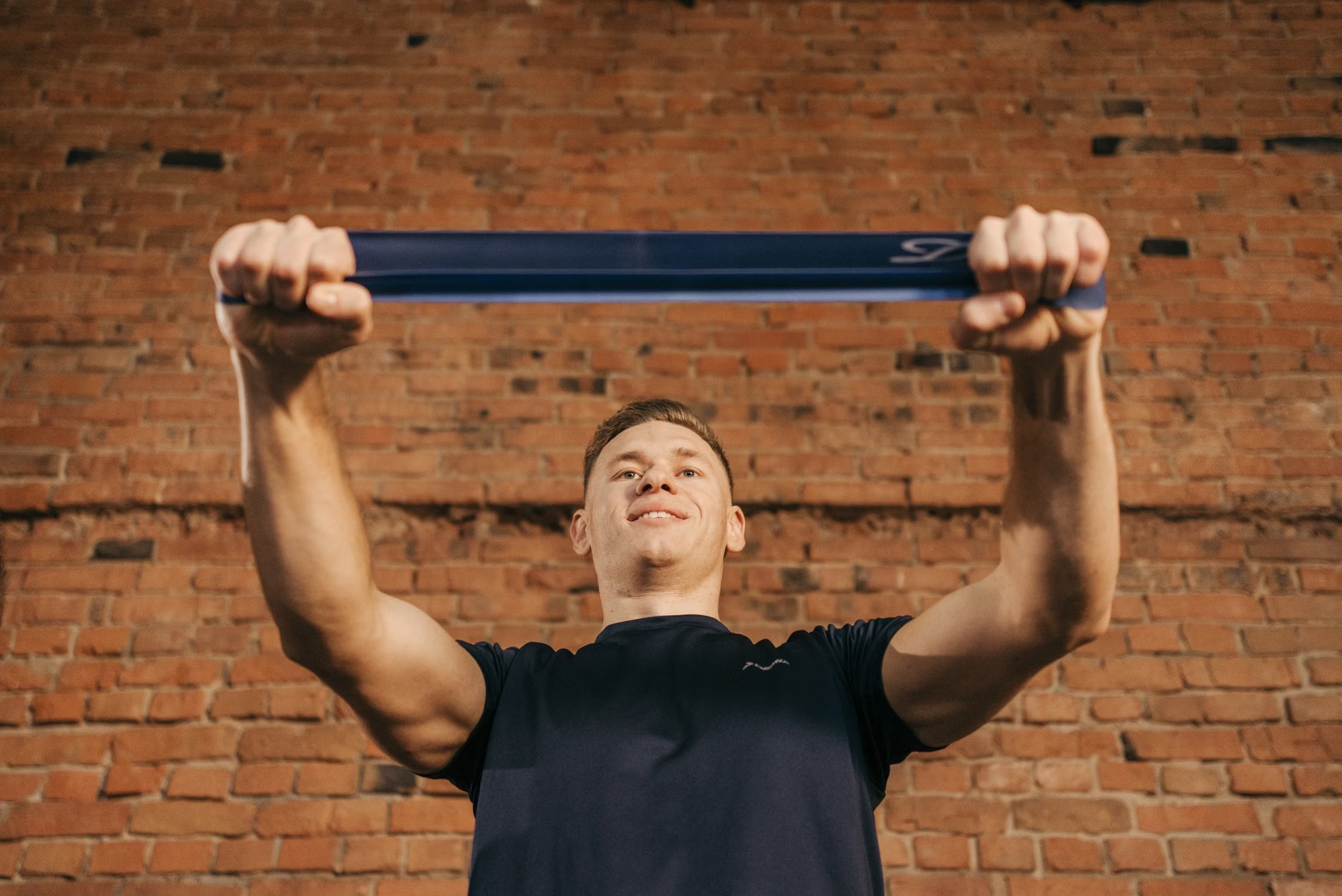
I thought I had built a clever little anti-aging routine out of ordinary life.
At work, I climb roughly 15 floors two to four times. During bathroom breaks, I brace my hands against the sink and do 50 incline push-ups—usually at least twice. At home, I do squats whenever they cross my mind.
It is not elegant, but it happens. That matters more than the workout plan I never start.
Then I looked at the routine one movement at a time. My legs were working. My chest and arms were pushing. But what was pulling?
Nothing.
So I bought resistance bands.
That solved the shopping part. It did not automatically solve the exercise part.
What does “pulling” mean here?
A pulling exercise brings resistance toward you or brings you toward something. A row is the easiest example: the elbows travel back while muscles around the upper back and arms help move the load.
That is different from a push-up, where I press my body away from the sink.
The distinction sounds obvious once someone says it. I had simply never audited my improvised routine that way.
The National Institute on Aging recommends strengthening the major muscle groups, including the back, shoulders, and arms, at least two days a week. Federal physical-activity guidance makes the same broad point: a useful strength routine should not repeatedly train only the parts we happen to remember.
This does not mean every person needs a complicated gym split. It means my hundred sink push-ups do not secretly become back exercises because the number is impressive.
Two useful directions—and one empty space
The repetition count looked complete. The movement directions did not.
- Stairs and squats: lower body
- Sink push-ups: pushing away
- Band row or pull-apart
- No-band upper-back control
Why I bought bands anyway
Resistance bands appealed to me for the same reason the sink does: they remove friction.
They are small. They do not require a trip to the gym. I can keep them where I can see them. A band row also makes the missing direction—pulling—easy to understand.
But bands introduce their own beginner questions. Which band? Where should it be anchored? Is the anchor actually secure? Why do three videos show three different versions of the same exercise?
That confusion appears often in searches for resistance band exercises for beginners. I am not going to pretend one article can inspect my form or prescribe the right resistance. My safer rule is simpler: learn one movement slowly, use a setup designed for the band, and stop if something feels sharply painful or unstable.
I also will not loop a band around a random door handle and hope for the best. A band snapping loose toward the face is a terrible way to make an exercise memorable.
The band is one option, not the whole plan
If the bands are nearby and the setup is secure, I can learn a basic row or a pull-apart. The British Heart Foundation shows beginner resistance-band movements and describes the pull-apart as bringing the hands outward while squeezing the shoulder blades together.
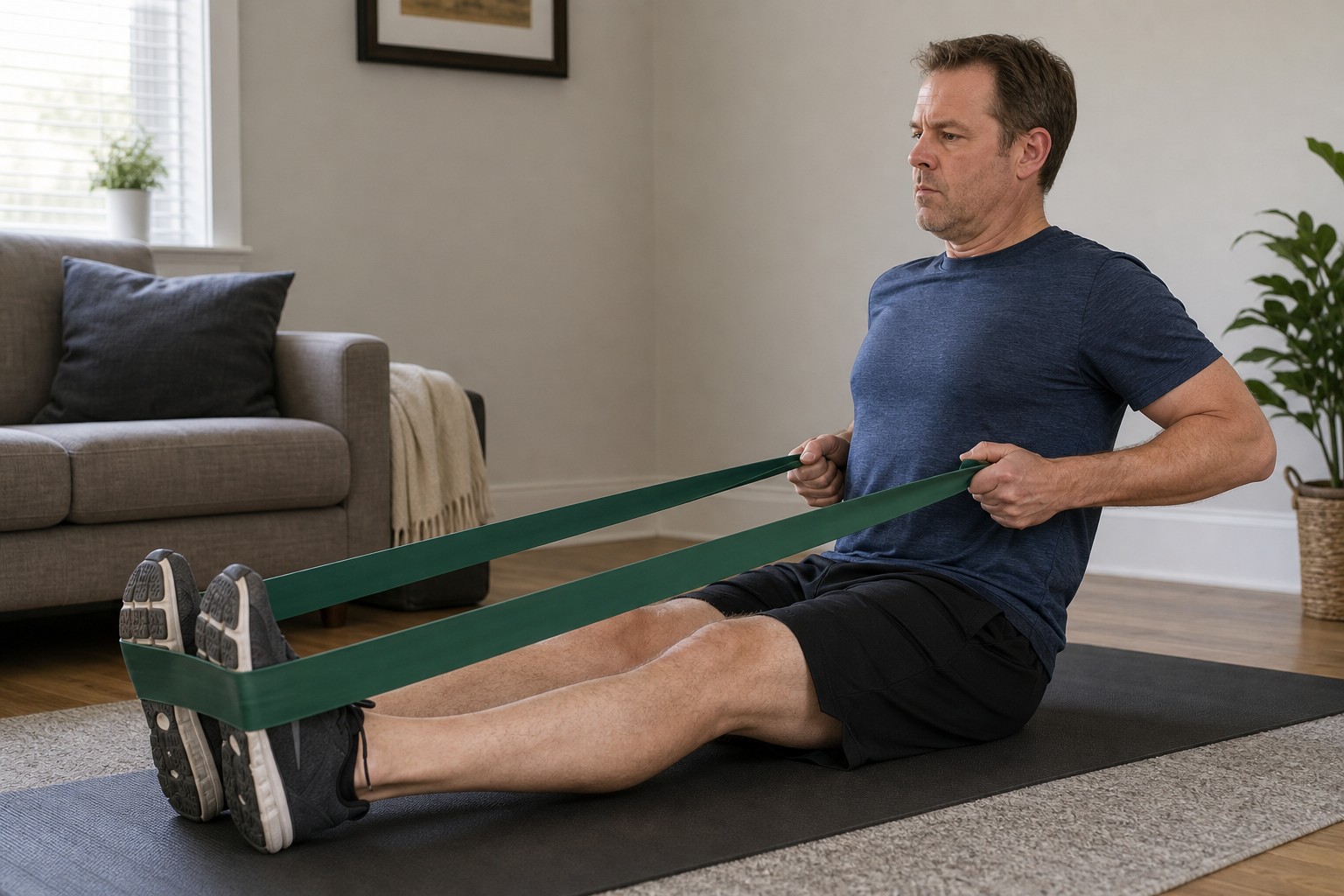
If I do not want to set up the bands, I can still practice the idea of controlling my shoulder blades with a gentle prone W raise or reverse snow angel on the floor. Those are not identical substitutes for a progressively loaded row. They are simply low-equipment ways to stop treating the back as invisible.
A backpack row is another possible bridge because the load can be changed. But “possible” is doing work in that sentence. The bag has to be closed, the contents stable, and the movement comfortable. Household objects do not come with coaching.
| What already happens | What it mainly adds |
|---|---|
| Stairs | Legs, breathing, and daily capacity |
| Sink push-ups | An upper-body pushing pattern |
| Squats | Another lower-body pattern |
| Band row or pull-apart | A deliberate pulling or upper-back movement |
| No-band W raise or reverse snow angel | A low-equipment way to practice upper-back control |
This is not a complete workout prescription. It is a memory aid for the hole I found in my own routine.
My actual experiment
I am not deleting the odd little routine that already survived real life. The stairs stay. The sink push-ups stay. The occasional squats stay.
I am adding pulling in the smallest form I can repeat.
At first, success will not mean bigger muscles or a heroic resistance level. It will mean that the bands stop being something I purchased and start being something I use. Once the movement feels familiar, I can track the band, repetitions, or control and make it gradually more challenging.
That last part matters. Strength work needs a reason to remain challenging over time. More is not always better, but forever doing the easiest version is not a progression plan either.
My old routine was not wrong. It was incomplete.
That feels fixable.
If you have a home exercise routine, what movement do you keep forgetting—push, pull, legs, balance, or carrying something heavy enough to count? I would genuinely like to know what other people discover when they audit the habits they already have.
For the fuller story behind this routine—including why I stopped treating a high repetition count as a complete strength plan—read my original muscle-loss and creatine self-audit.
Sources
- National Institute on Aging: Three Types of Exercise Can Improve Your Health and Physical Ability
- Physical Activity Guidelines for Americans, 2nd edition
- British Heart Foundation: Resistance band exercises you can do at home
Featured photo: Pavel Danilyuk/Pexels. Used under the Pexels license.
This article shares a personal exercise experiment for general education. It is not medical advice or an individualized training plan. If you have pain, an injury, balance concerns, or a medical condition, ask a qualified healthcare or fitness professional what is appropriate for you.
Leave a Reply