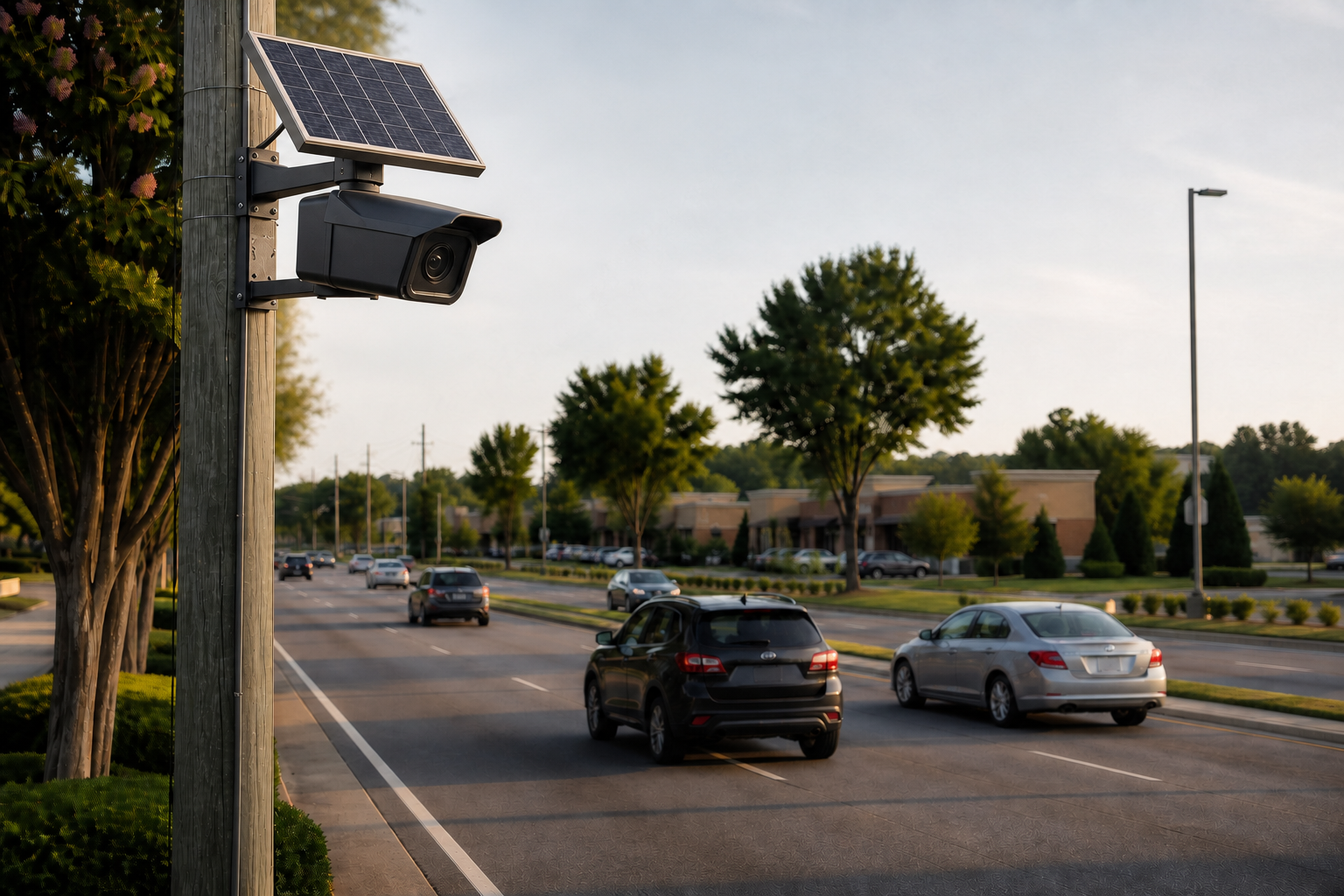
I have driven past traffic cameras for years without thinking much about them. In South Korea, cameras at intersections, parking entrances and toll roads feel like ordinary infrastructure. In the United States, I assumed a roadside camera was doing something similarly limited: watching traffic or checking one location.
Then Flock license-plate cameras became a national argument.
Cities have begun suspending contracts, residents have demanded removals, and Flock has announced tighter controls after reports of police misuse. That made me ask a more basic question: What do Flock cameras actually record—and who can search the record of where my car was seen?
The answer is not simply “a picture of a license plate.” The bigger issue is what happens after the picture enters a searchable network.
- ALPR — Automated License Plate Reader
- A camera system that photographs vehicles, reads license plates and attaches information such as time and location.
- Vehicle fingerprint
- A searchable description that may include a vehicle’s make, model, color and visible features such as decals or roof racks.
- Retention period
- How long a record remains stored before it is deleted.
- Audit log
- A record showing who searched a system, when, and sometimes why.
What do Flock cameras actually record?
A traditional security camera records a scene. An automated license-plate reader turns a passing vehicle into structured, searchable information.
Flock says its cameras capture still images rather than continuous video. Current reporting describes records that can include the plate, vehicle make, color, visible features, time and location. One camera sighting may mean little. Sightings from many locations can reveal a route or pattern.
That distinction matters. The question is no longer only, “Was my car photographed at this intersection?” It becomes, “Can someone search where this car appeared across a larger network?”
One camera sighting becomes searchable data
From passing car to search result
The privacy question grows with the network: retention, sharing and search access determine what one sighting can reveal.
Flock is a private company, while many of its customers are police departments, cities, homeowners associations and businesses. The public-private structure can make responsibility hard to follow. A city may own or subscribe to its cameras, yet searches or shared records may reach beyond that city.
In August, Flock said it would require criminal case numbers for police searches, automatically review searches for abnormal activity, shorten its default retention period from 30 days to seven, and give departments more control over sharing. Those changes came after scrutiny of officers accused of using license-plate reader systems to search for romantic partners or other people for personal reasons. The Associated Press summarized the changes and the documented concerns.
These guardrails are meaningful. They also reveal what the controversy is about: access, sharing, retention and accountability—not the camera lens alone.
Why is the American reaction so intense now?
The United States has used license-plate readers for years. What feels new is their spread through an interconnected private network, along with evidence that authorized users can misuse powerful searches.
The opposition also crosses familiar political lines. Civil-liberties groups worry about mass surveillance, immigration enforcement and tracking people who have not been accused of a crime. Conservatives have raised concerns about government overreach. Local officials still point to cases in which the cameras helped find stolen vehicles, missing people or criminal suspects.
That creates a real tradeoff. A system can help solve a serious crime and still need stronger limits. “Useful” and “safe from misuse” are not the same claim.
Compare rules, not stereotypes
Five questions that change what a camera means
The argument became especially visible in August. Communities reconsidered contracts, people damaged cameras, and a national survey reported more opposition than support for police use of license-plate readers. TechCrunch reported the survey alongside the growing backlash. The spread of the argument does not by itself prove every allegation made about the cameras.
Why can the same technology feel ordinary in South Korea?
My first instinct was cultural: perhaps people in South Korea are simply more accustomed to cameras. That explanation is too easy.
South Korea’s Personal Information Protection Act permits fixed cameras in public places for listed purposes such as crime prevention, facility safety, traffic enforcement and traffic-information collection. It also requires notice of the purpose, location, recording range, operating time and responsible contact. Operators may not casually turn the camera toward another purpose, and they must protect the recorded information. Those requirements appear in Article 25 of the law.
That does not prove every Korean camera is well governed. It does show why “Koreans do not care about privacy” would be the wrong conclusion. Cameras may feel ordinary partly because their stated purposes, warning signs and government role are familiar. Whether retention and data sharing receive enough public scrutiny is a separate question.
China is not simply a more-camera version of Korea
China belongs in this comparison, but not as another point on a simple scale from “privacy” to “no privacy.”
Human Rights Watch has documented Chinese police systems that combine automatic number-plate recognition with other large data sources and surveillance tools. When plate records can be joined with facial recognition, identity records and other government databases, the capability moves beyond managing one road or parking entrance. Its reporting describes that broader police-data environment.
The important comparison is therefore structural:
- Is the system local or national?
- Is it operated by government, private companies, or both?
- Who may search it?
- How long are records kept?
- Is every search audited?
- Can a person discover, challenge or correct misuse?
The number of cameras matters. The rules connecting the cameras matter more.
Can I see where these cameras are installed?
Yes—but there is no complete official public map. The volunteer-run DeFlock map shows reported locations of Flock cameras and other automated license-plate readers. Its markers come from crowdsourced OpenStreetMap data, so a location can be missing, outdated or misidentified. I would use it as a starting point for checking my area, not as proof that every marked camera is active—or that an unmarked road has none.
The visual clues help when checking a reported location: many roadside readers use a small rectangular housing aimed along a traffic lane, with a separate tilted solar panel above it. Other brands and installations can look different, so the map and the hardware both need verification.
I still do not react to every roadside camera with alarm. But I no longer think the small black box on a pole tells me what the system is. To understand that, I need to know where its records travel after my car passes underneath.
This article provides general educational information about technology and privacy. Laws and local policies vary; it is not legal advice.
Leave a Reply