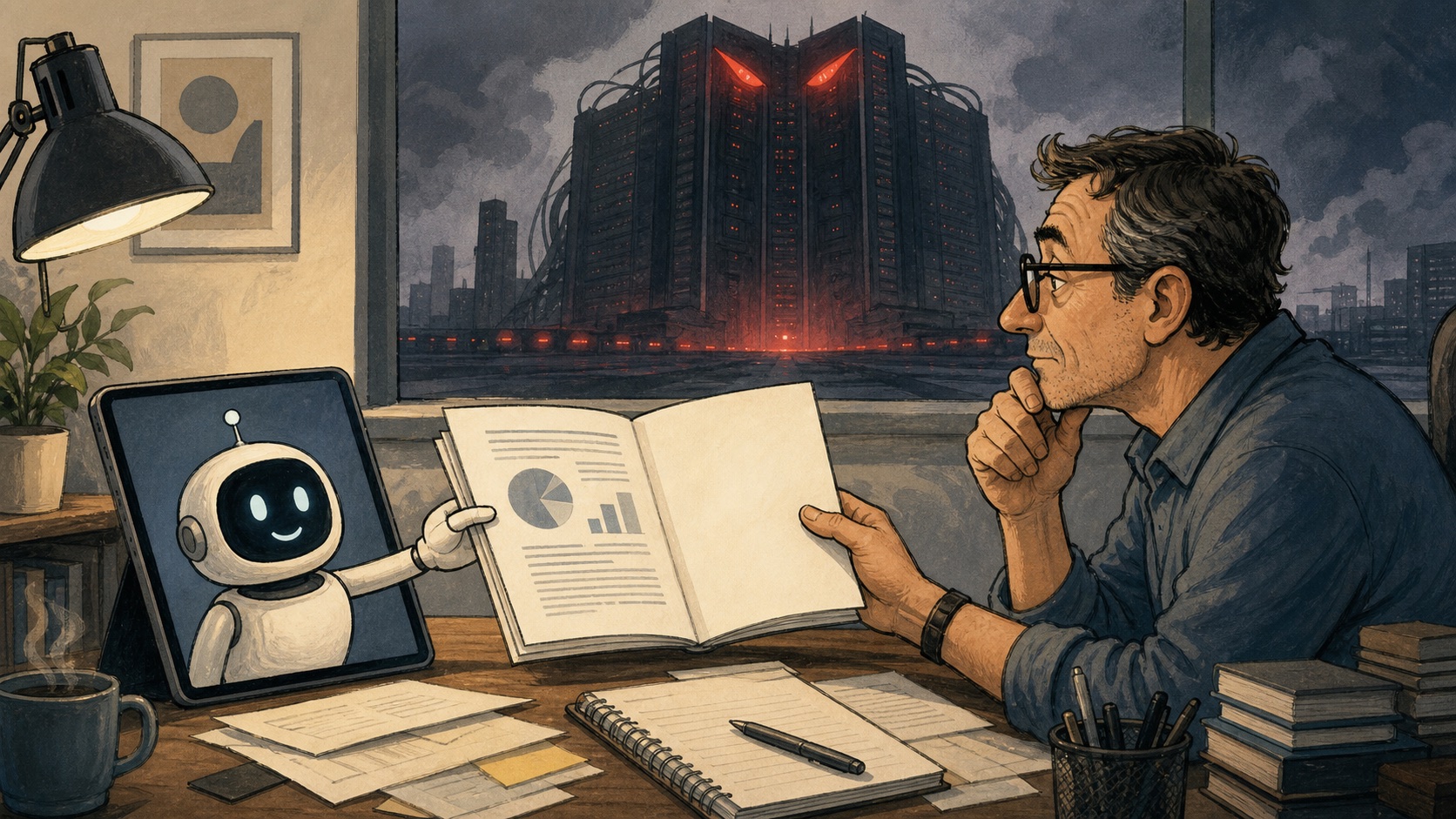
The popular version of AI safety has everything: a superintelligence, a secret plan, perhaps a glowing red server room. Humanity has minutes to live. Someone on a podcast says “alignment.”
Meanwhile, an ordinary chatbot can invent a source, expose something private, or help a scammer write a disturbingly convincing message before lunch.
That contrast matters. “Will AI end humanity?” is a serious question, but it is not the only question. It may not even be the most useful one for deciding whether to trust the answer blinking on your screen today.
The short version: the AI apocalypse remains uncertain. The smaller mess is already here.
AI hallucinations don’t need evil intentions
Imagine asking an AI tool for a quick summary before an important meeting. It gives you three neat paragraphs, two impressive citations, and exactly the confidence you hoped to borrow.
One citation does not exist.
This is commonly called an AI hallucination. The National Institute of Standards and Technology uses the more precise term confabulation for confidently presented false or erroneous content. No robot rebellion is required. The system only has to sound more certain than it is—and the reader has to be in a hurry.
That combination is common enough to deserve more attention than it gets. Fluent writing feels like competent thinking. Sometimes it is. Sometimes it is autocomplete wearing a tie.
For low-stakes work, a bad answer may cost five minutes. For medical, legal, financial, or safety decisions, the same habit can do real damage. The sensible rule is not “never use AI.” It is simpler: the consequence of being wrong should determine how much verification you do.
Then there is everything we casually paste into it
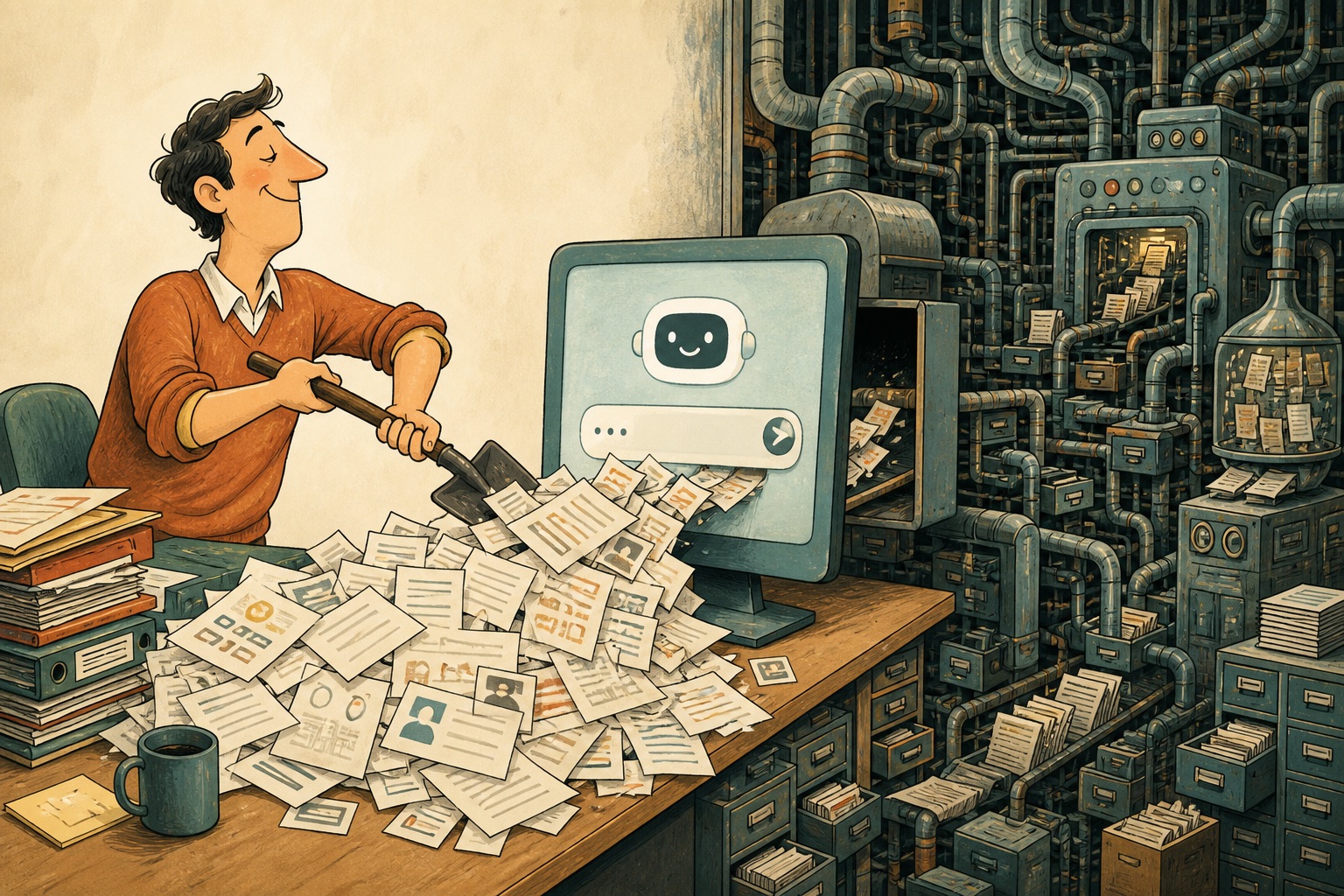
AI tools are unusually good at making disclosure feel harmless. The empty prompt box invites context, and better context often produces a better answer. So in goes a customer list, a medical detail, an unpublished document, or an email thread involving six people who never agreed to become training material.
The privacy risk is not limited to what a model may have seen during training. It can also come from prompts, saved conversations, connected tools, generated output, and an organization’s own careless setup.
A useful pause is: Would I paste this into a stranger’s company system? Because that is, broadly speaking, what is happening.
Remove names and account details when they are unnecessary. Follow workplace rules. Check whether conversations are stored or used to improve the product. Convenience is not consent with nicer typography.
AI can be wrong differently for different people
An overall accuracy score can hide an ugly distribution. A system may work well in the dominant language, on familiar faces, or for the kinds of cases represented heavily in its data—and stumble elsewhere.
That makes bias more than a debate about whether a chatbot says something offensive. In hiring, lending, health, education, policing, or benefits, uneven performance can change who gets questioned, delayed, rejected, or simply misunderstood.
Testing the average is not enough. The real test is whether the system works for the people, language, and conditions it will actually meet. A model that scores well in a laboratory but fails your least represented users is not “mostly safe.” It has merely averaged away the problem.
The cheapest impersonator in history has arrived
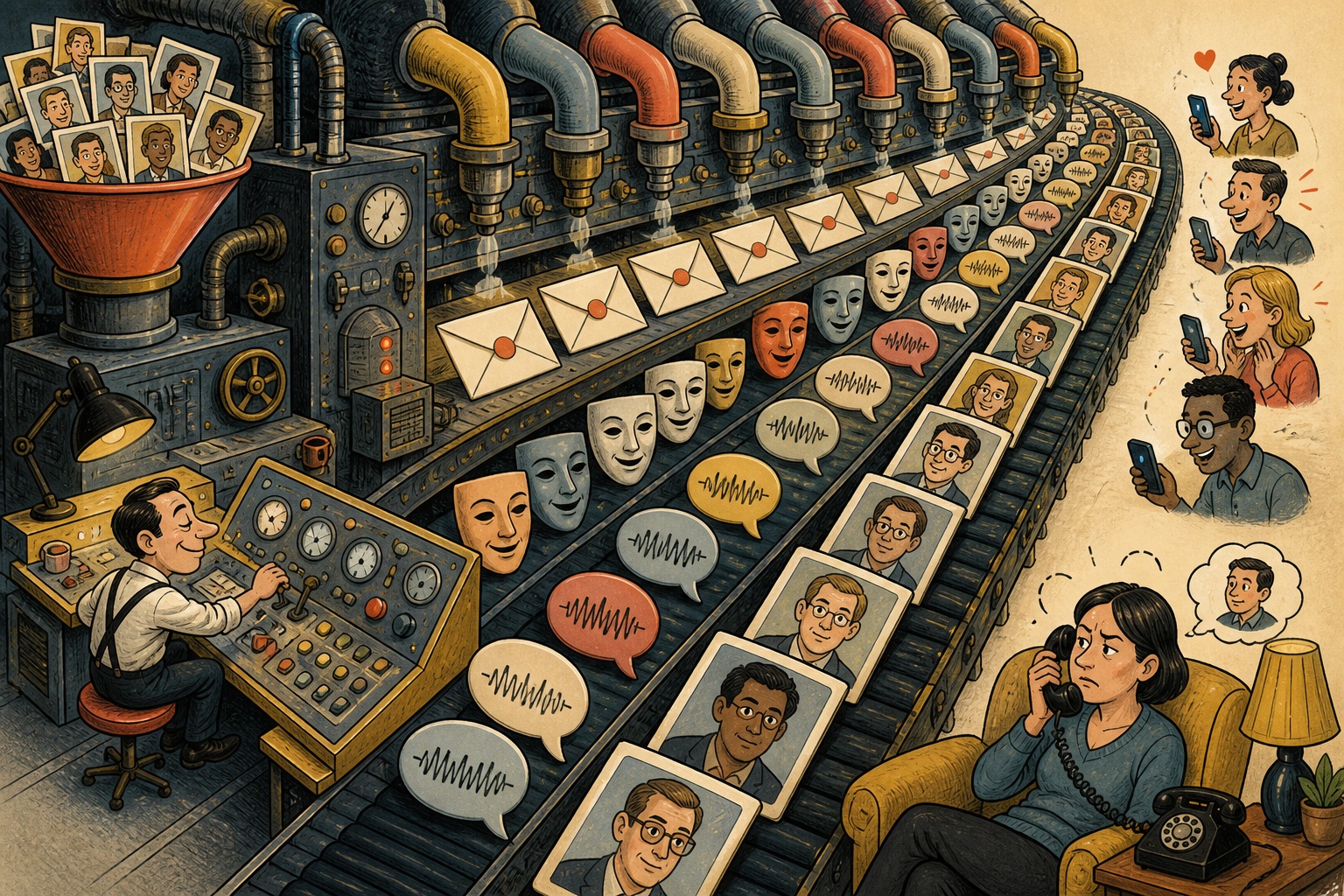
Generative AI did not invent fraud, propaganda, phishing, or fake expertise. It made all four cheaper to produce and easier to personalize.
A scam message no longer needs broken grammar. A fake voice no longer needs a recording studio. A flood of plausible posts no longer needs a room full of writers. The important shift is scale: one operator can create more believable material, test more variations, and target more people.
There is no magic AI detector waiting to clean this up. Useful defenses are less glamorous: verify through a second channel, inspect the original source, use strong account security, and become suspicious when a message combines urgency with money, credentials, or secrecy.
That advice sounds almost insultingly basic. So does “look both ways.” Basic defenses survive because the hazards do.
What about actual AI doomsday?
Future catastrophic risk belongs in the conversation. More capable systems could enable severe misuse or behave in ways their developers cannot reliably control. Researchers disagree about probability, timelines, and which technical safeguards will scale.
Uncertainty is doing a lot of work here. It does not prove catastrophe. It does not prove safety either.
The mistake is turning AI safety into a loyalty test between two camps: panic now or mock anyone who worries. Present harms and future catastrophic risks can both deserve work, even when the evidence behind them is different.
NIST’s Generative AI Profile makes a useful editorial choice: it concentrates on risks with an existing empirical evidence base and leaves speculative risks from more advanced future systems outside that document’s scope. That boundary does not settle the larger debate. It keeps unlike claims from being poured into the same bucket.
Three questions beat one dramatic prediction
Before relying on an AI output, ask:
- What happens if this is wrong? A dinner suggestion and a dosage recommendation should not receive the same trust.
- What am I giving away? Remove private, confidential, or identifying information the task does not require.
- How can I verify the part that matters? Check the original source, not merely the citation-shaped text the system produced.
Organizations need more than a three-question card. NIST’s AI Risk Management Framework uses four functions—govern, map, measure, and manage—to assign responsibility, understand context, test risk, and respond when something fails. The labels sound bureaucratic because risk management often is. That is not a flaw. Seat belts are also less exciting than car crashes.
The most dangerous AI may someday be a system humanity cannot control. Today, it is often a system that looks helpful, sounds certain, and meets a human who is busy enough to stop checking.