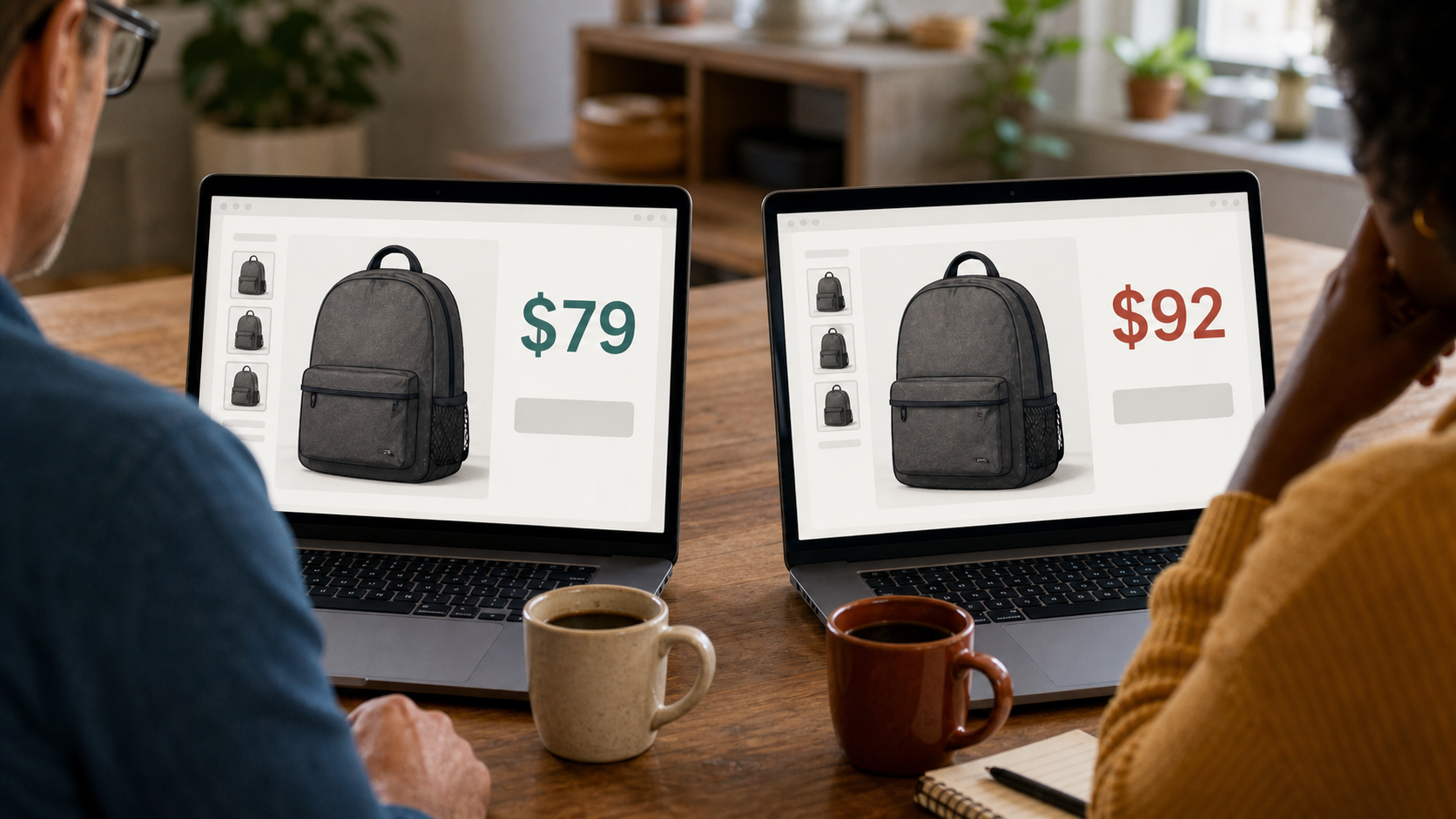
Imagine two people opening the same product page at the same time.
Same store. Same item. Same ZIP code. One sees $79. The other sees $92—not because stock changed, but because a system decided the second shopper might tolerate the higher price.
That is the worry behind personalized pricing, sometimes called surveillance pricing. The short answer is that the technology to tailor prices and promotions using personal data exists. The harder question is how often a retailer changes the actual price for an individual, rather than changing the ad, discount, ranking, or offer around it.
That uncertainty matters. It is also why the Federal Trade Commission is now drawing a sharper line: personalized pricing is not automatically illegal, but hiding how personal data changes a price may violate federal consumer-protection law.
Short answer
Personal data can influence an online price, discount, or product ranking. But a changing price by itself does not prove that a retailer personalized it for you.
Personalized pricing is not the same as dynamic pricing
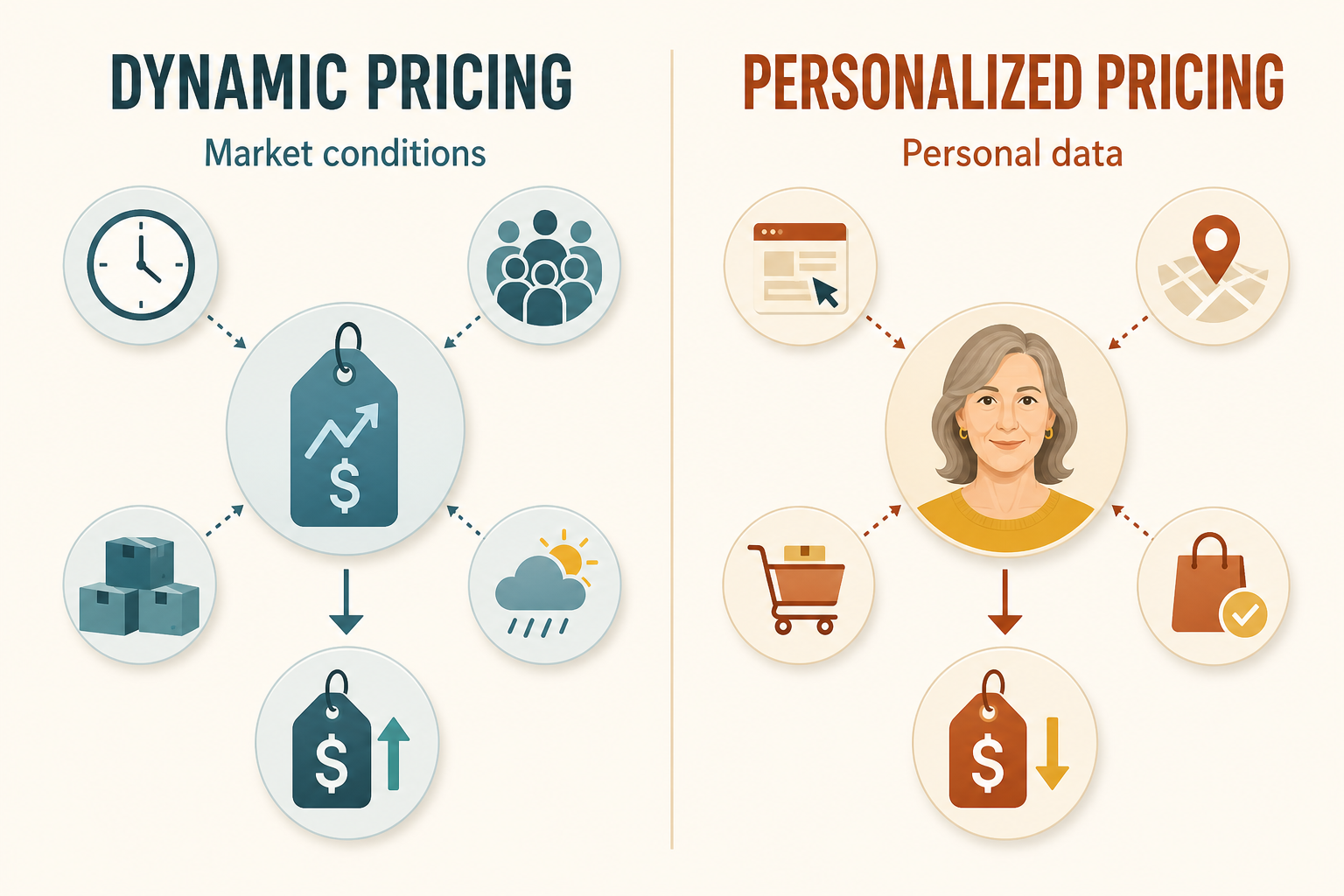
A hotel room becoming more expensive during a holiday weekend is dynamic pricing. So is a ride costing more when demand spikes after a concert. The price changes because market conditions changed for shoppers in that place or moment.
Personalized pricing asks a different question: What might this particular person be willing to pay?
The distinction is about the input.
- Dynamic pricing: demand, supply, time, inventory, weather, or local conditions.
- Personalized pricing: information observed or inferred about a person or a narrow group, such as browsing patterns, purchase history, location, or predicted willingness to comparison-shop.
The two can overlap. A retailer might begin with a dynamic base price and then personalize a discount or promotion. From the checkout screen, the shopper may not be able to tell which mechanism moved the number.
This is also broader than a familiar loyalty discount. If a store clearly says members receive 10% off, the rule is visible. The uncomfortable version happens when the price looks universal but is quietly built for the profile behind the screen.
What data could influence a price?
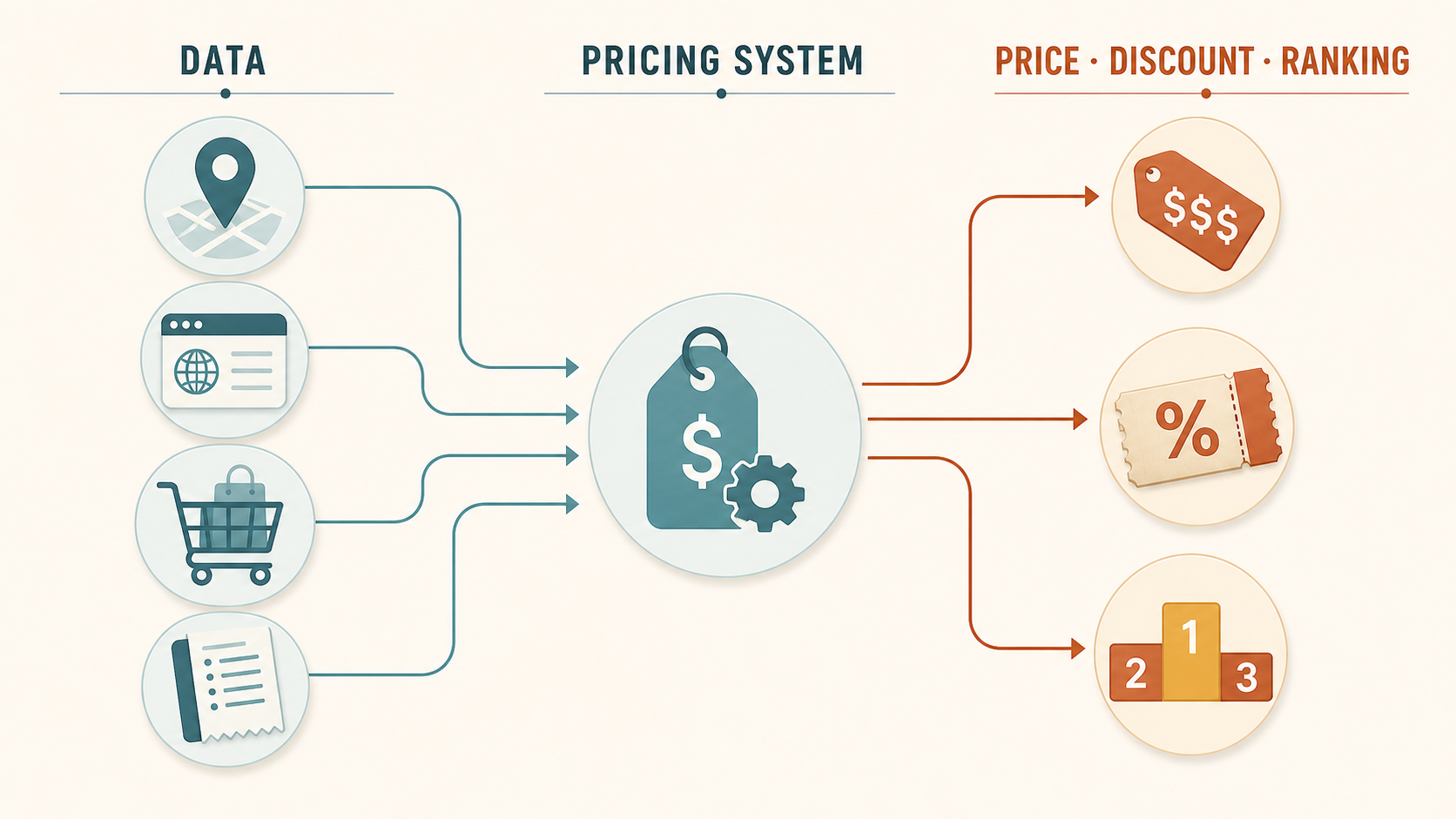
The FTC has spent years examining intermediaries that help companies tailor prices and promotions. Its 2025 staff work described systems capable of using precise location, demographics, browsing behavior, shopping history, mouse movements, and products left in an online cart.
That does not mean every retailer uses every signal, or that every abandoned cart is punished with a higher price. The FTC said the extent of current personalized pricing remains poorly understood. Its public examples were hypothetical because confidential company material had to be aggregated or anonymized.
Still, the machinery is not imaginary. A pricing system may receive first-party data from the store, inferred data produced by an algorithm, or information supplied by outside data brokers. It can then change more than the number printed beside “Buy now.” It might alter:
- which discount appears;
- which product is shown first;
- whether a promotion is offered;
- the size or timing of an incentive;
- or, in some cases, the price itself.
That last distinction is easy to miss. Showing one shopper a premium baby thermometer first is not the same as charging two shoppers different prices for the identical thermometer. Both can steer spending, but only one is a literal price difference.
The FTC proposal is about secrecy, not a universal ban
On August 19, 2026, the FTC proposed an enforcement policy statement on personalized pricing. It is a proposal, not a new blanket prohibition.
The agency says Congress has not given it authority to ban personalized pricing in every circumstance. Instead, the eight-page draft focuses on unfair or deceptive practices under Section 5 of the FTC Act. If shoppers reasonably believe a listed price is static or widely offered, a business may mislead them by secretly personalizing it.
The FTC says a meaningful disclosure should explain three things clearly:
- that the price is personalized;
- the basis for the personalization;
- the types of data being used.
A vague “special price for you” banner may not answer any of those questions. Is it a real discount based on loyalty? A higher price based on estimated disposable income? A promotion triggered by an abandoned cart? The label sounds friendly while revealing almost nothing.
The proposed statement also leaves a large area unresolved. Fully disclosed personalized pricing is not necessarily illegal, and the FTC declined to declare every such practice unfair. Insurance and credit already use individual characteristics under industry-specific rules. Market competition can also limit how much a seller can charge: if another tab shows a better price, the algorithm loses the sale.
So the useful legal answer is not “personalized pricing is illegal.” It is this: undisclosed personalization can create deception or unfairness, and the FTC is signaling that it intends to enforce existing law more aggressively.
How would you know whether the price changed for you?
Usually, you would not know from one screen.
A price difference can have ordinary explanations: a sale expired, inventory changed, taxes or delivery locations differ, one shopper is signed into a membership account, or a cached page is stale. A single mismatch is not proof of surveillance pricing.
A five-minute price check
If a purchase is large enough to justify five extra minutes, make the comparison cleaner:
- Record the exact item, model, seller, shipping terms, and time.
- Compare the signed-in price with the retailer’s logged-out or private-browsing page.
- Check another device or network if one is conveniently available.
- Compare the final checkout total, not just the headline price.
- Save screenshots when the difference is meaningful and repeatable.
Private browsing can reduce some cookie-based recognition. A VPN can change the location suggested by an IP address. Neither makes you anonymous, and neither guarantees a lower price. An account login, delivery address, device fingerprint, loyalty record, or other signal may still reconnect the visit to a profile.
There is another trap here: turning every price change into a private investigation. Constantly refreshing six browsers to save 43 cents is not consumer power. It is an unpaid internship in retail analytics.
Use the check where the stakes justify it—travel, electronics, subscriptions, event tickets, or another expensive purchase—and where the comparison can be made on equal terms.
What should a trustworthy price notice say?
The FTC proposal points toward a simple standard. A shopper should not need a privacy-law degree to understand why a number moved.
A useful notice would say that the offer is personalized, identify the broad reason, and name the data category involved. For example: “This discount is based on purchases made through your loyalty account.” That is far more informative than “AI-powered savings selected for you.”
Retailers will argue that personalization can produce benefits. It can match discounts to people likely to use them, reduce irrelevant promotions, and sometimes lower prices. Economic research does not support a tidy claim that every consumer loses. Some may pay less; others may pay more. Results depend on the data, the market, and whether shoppers can easily choose a competitor.
But the burden should not fall entirely on the shopper to reverse-engineer a price. If personal data helped produce the number, the business knows more about the transaction than the buyer does. Disclosure is the minimum needed to make that imbalance visible.
The unsettling part of personalized pricing is not simply that prices move. Prices have always moved. It is the possibility that the shelf tag is looking back at you—and estimating how hard you will push before you walk away.
Leave a Reply