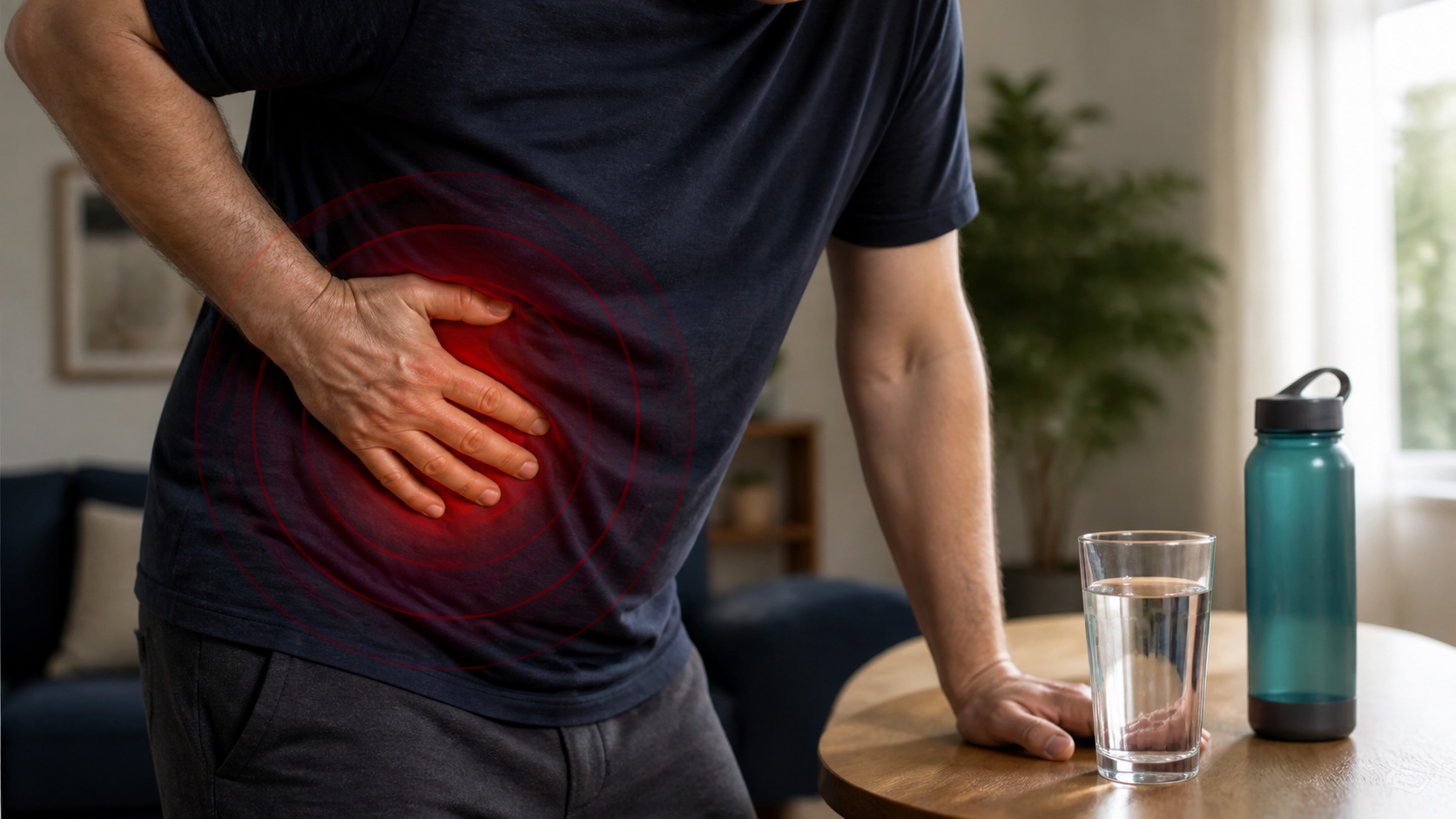
My evaluation pointed to insufficient water intake, so I stopped leaving hydration to thirst and memory.
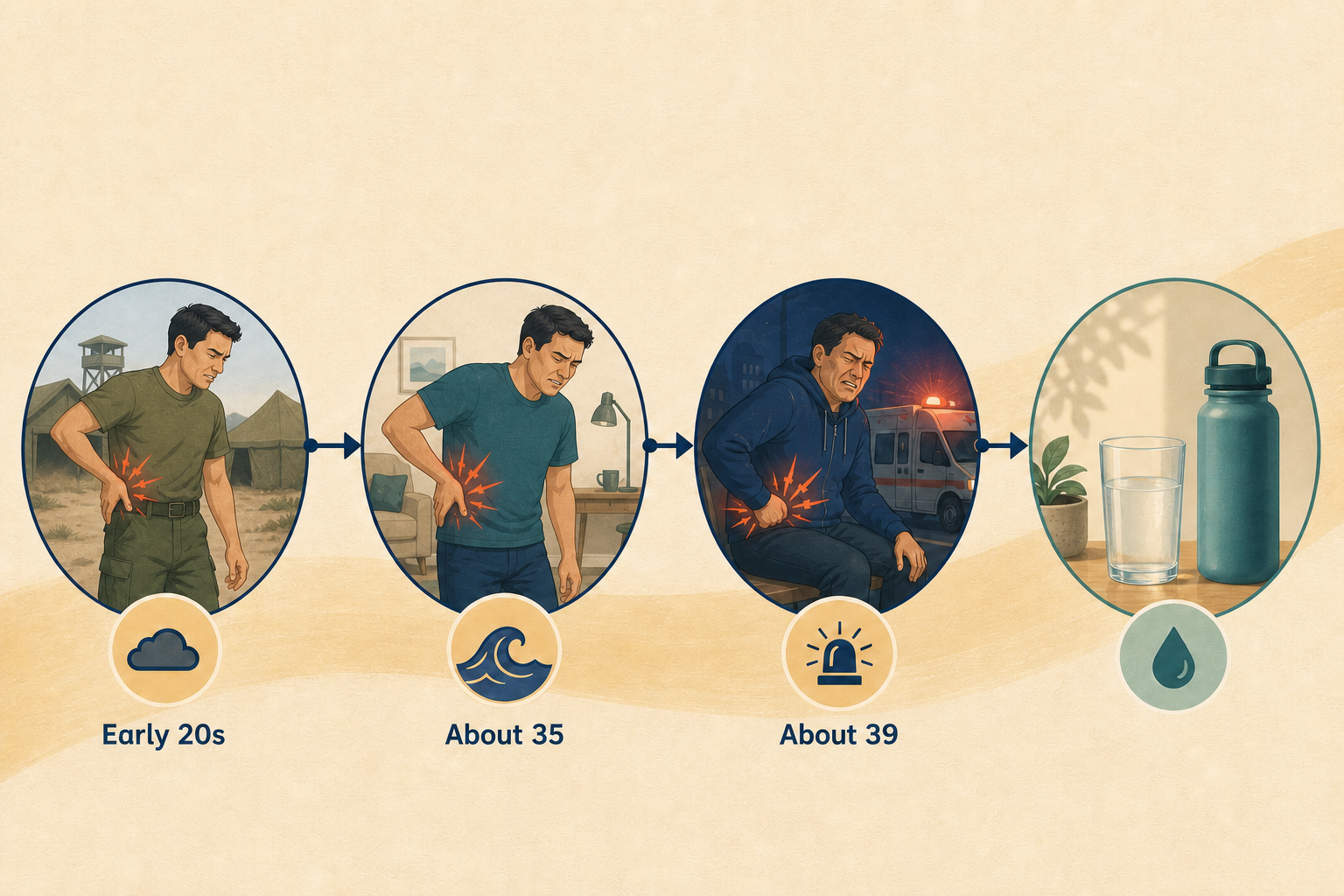
The first time it happened, I was serving in the military.
The pain was overwhelming. It lasted for about an hour and then eased. I felt lucky, but I also had no idea what had happened. At the time, a kidney stone did not even cross my mind.
Then it happened again in 2008, when I was about 35.
The third episode came in 2012, when I was about 39. That one sent me to the emergency room, where the pain became severe enough that I was given morphine.
After the stones were evaluated and my history was reviewed, insufficient water intake appeared to be the main contributing factor in my case.
Three episodes were enough. Since then, drinking water has stopped being something I assume will happen naturally. I have to make it happen deliberately.
THE SHORT ANSWER
I was not drinking enough water consistently. I cannot undo those episodes, but I can make hydration easier to measure and harder to forget.
Why “drink more water” was not enough for me
“Drink more water” sounds simple. The problem is that it does not answer the questions that matter during an ordinary day:
- How much have I actually had?
- Does coffee or food count?
- Should I drink more when I exercise or when the weather is hot?
- How far behind am I by the afternoon?
For me, thirst was not much of a system. I would get busy, look up several hours later, and realize that I had barely touched my water.
That is why I wanted a calculator—not to produce a perfect medical number, but to turn a vague intention into a visible daily plan.
Daily water-intake planning calculator
Estimate a broad daily planning range
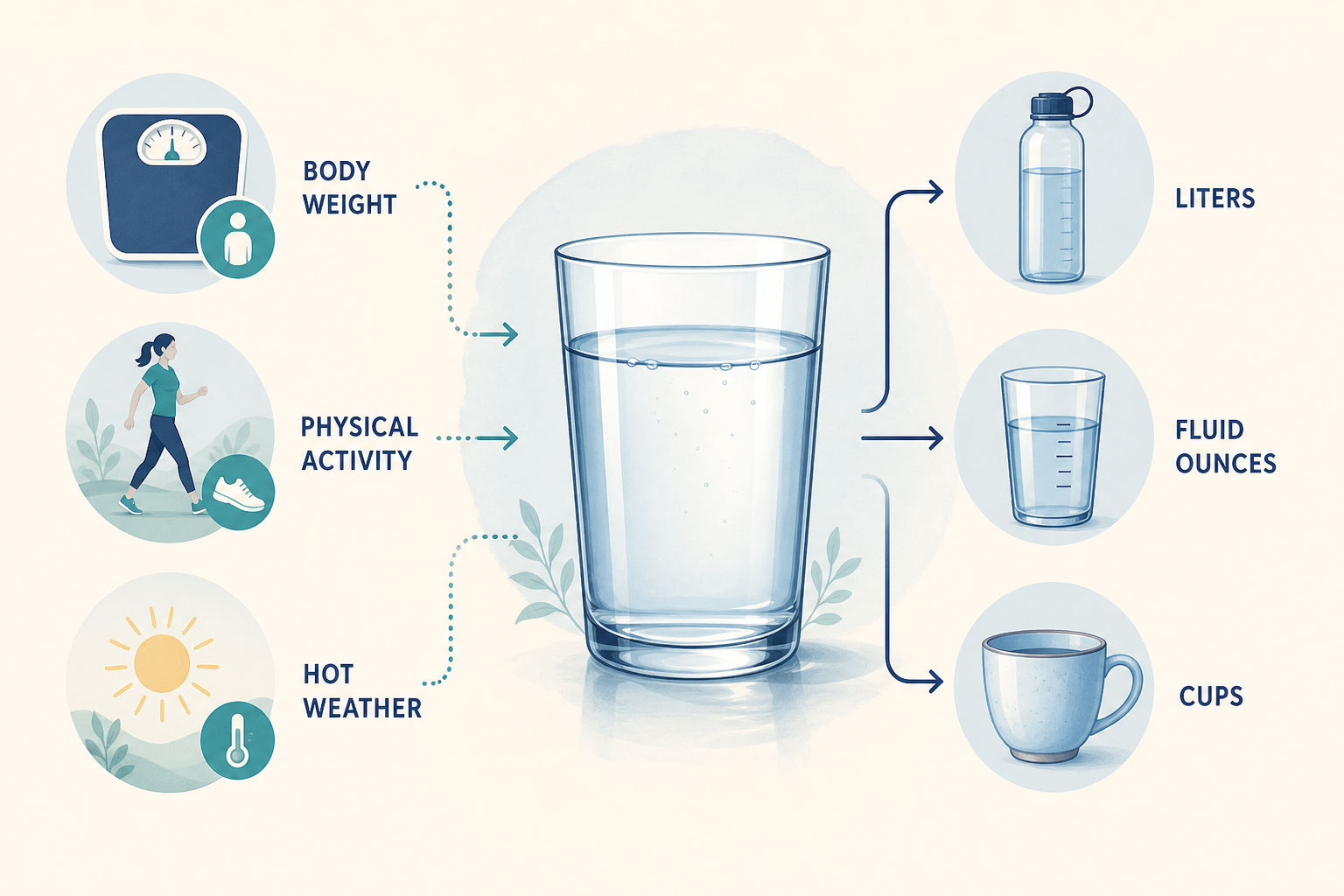
This uses 30–35 mL per kilogram as a simple reference range. It is not a prescription or a kidney-stone treatment target.
Food also contributes water. Medical conditions, medications, illness, pregnancy, stone type, and clinician-directed restrictions can change an appropriate target.
CHECK FIRST
Fluid needs vary. Heart failure, kidney disease, liver disease, medications, pregnancy, illness, and clinician-directed fluid restrictions can substantially change an appropriate target. Follow individualized medical advice when it differs from a general estimate.
For someone with a history of kidney stones, the amount swallowed is not the only useful measurement. Clinicians may focus on urine output and stone type when setting a prevention plan. That is one reason I do not want this calculator to pretend it knows more than it does.
What changed after my third stone
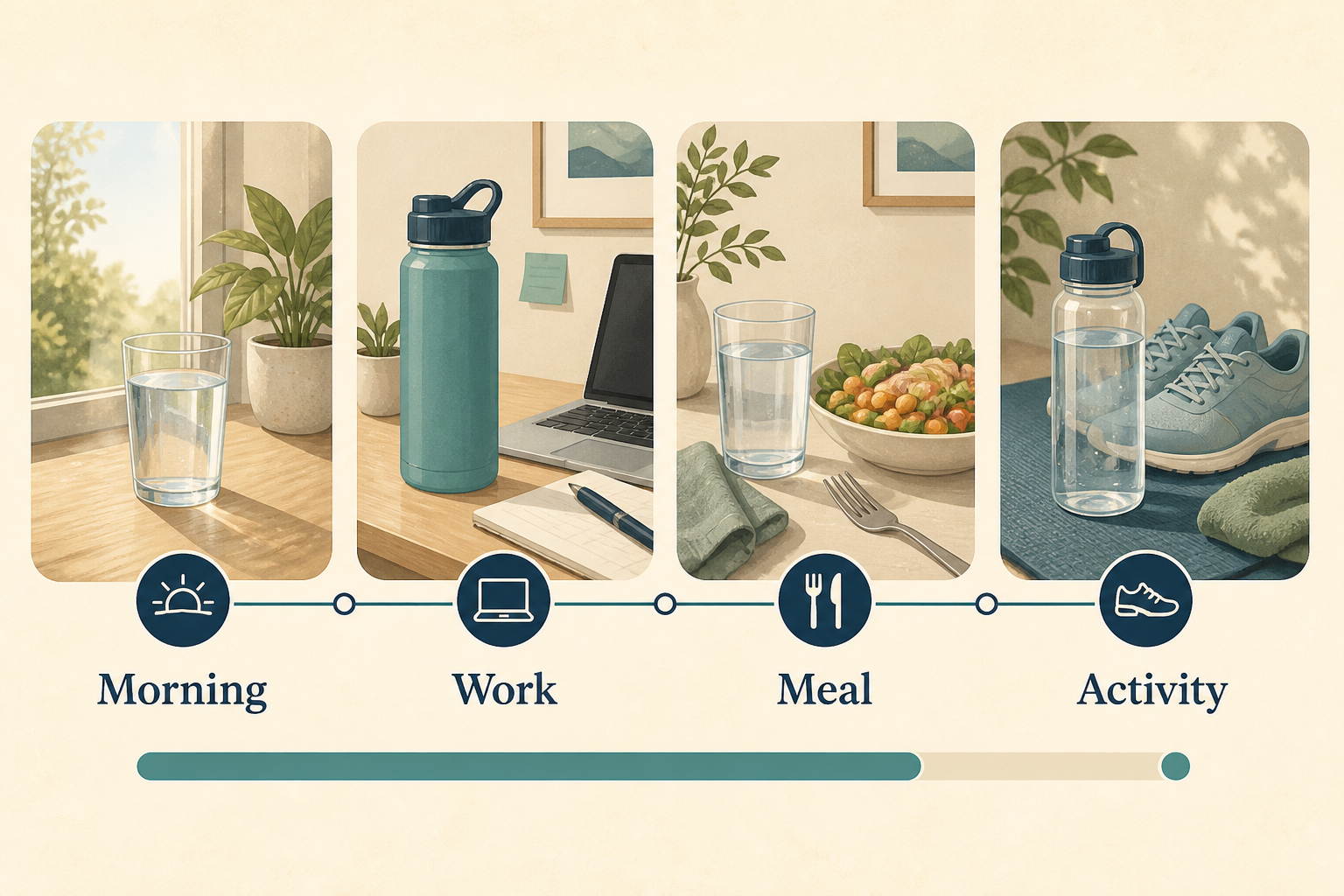
I did not suddenly become great at tracking water. I just stopped relying on one big promise to “drink more” and attached water to things I already do.
- Drink water soon after getting up.
- Keep it visible and within reach while working.
- Use meals as checkpoints instead of trying to catch up at night.
- Add more around exercise and hot weather.
- Check the day before it is almost over.
None of this is impressive. That is partly why it works for me. I am not trying to win a hydration contest; I am trying not to repeat an old mistake.
WHAT I AM CHECKING
By early afternoon, I should be able to tell whether I am reasonably on track. If most of the day’s water is still waiting for me at dinner, my routine has failed even if I force the total later.
Making water easier to drink consistently
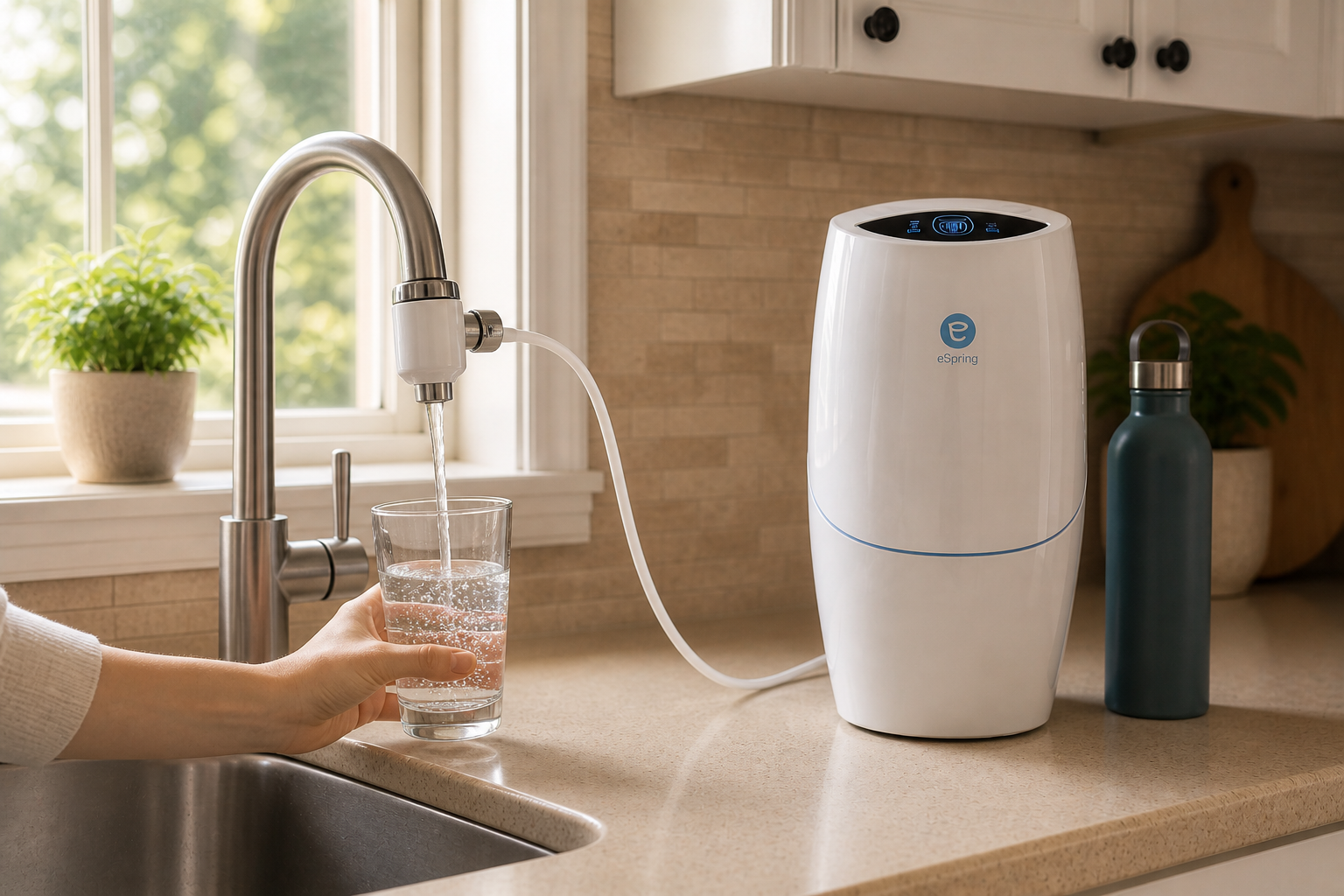
Consistency depends partly on convenience and taste. I use an Amway eSpring Water Purifier, and having filtered water readily available makes it easier for me to keep drinking throughout the day.
According to Amway’s current product information, the system combines an e3 carbon filter with UV-C LED treatment and allows listed dissolved minerals to pass through. That is different from reverse osmosis, but I do not want to turn this story into a product review—or imply that the filter prevented my stones.
I will look at UV, reverse osmosis, and minerals more carefully in the next article.
What I learned from three painful reminders
The lesson was not that everyone needs the same number of glasses or the same filter.
What finally mattered was turning a vague recommendation into something I could repeat. In my case, the evaluation pointed to too little water. The calculator, a visible bottle, and a few ordinary checkpoints help me deal with that weakness.
I wish I had understood that during the first episode in the military. I did not. It took two more episodes—and an emergency-room visit—to make the lesson impossible to ignore.
I still miss the mark on some days. But I would rather notice that at lunch than remember the pain later.
Next in this series
In the next article, I will look more closely at what “mineral-retaining” filtration actually means, how UV and reverse osmosis differ, and how much of our mineral intake normally comes from water versus food.
Leave a Reply